Site context and engineering objective
Industrial warehouse sites commonly include reinforced hardstanding, slab edges, loading zones and undocumented buried service crossings. Surface material and reinforcement can complicate radar profiles.
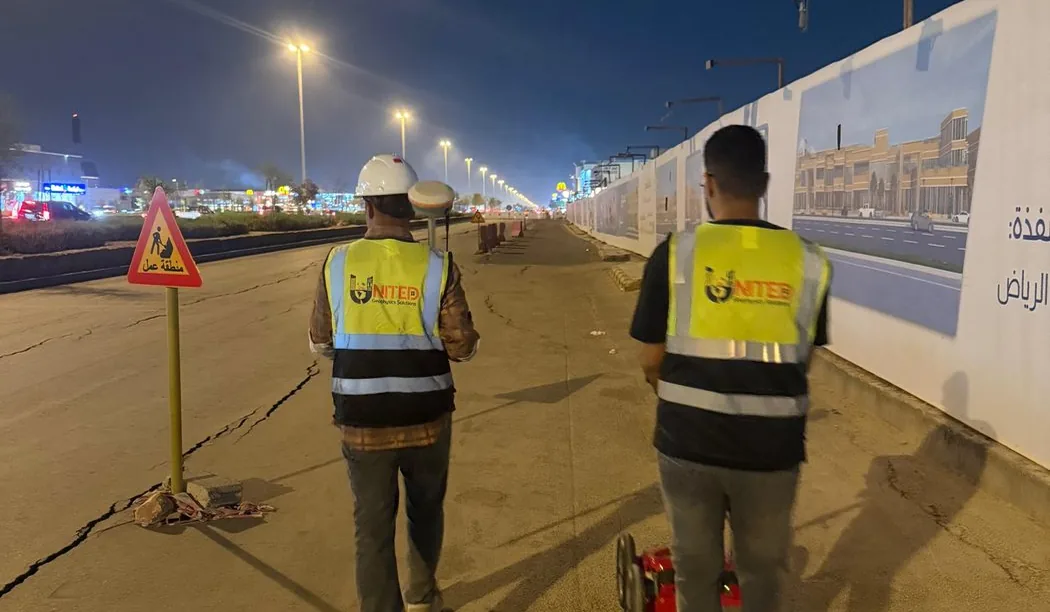
A warehouse-area GPR and subsurface anomaly investigation reference in Jeddah, supporting construction and maintenance planning.
Field approach and interpretation
- Review available warehouse drawings and distinguish indoor concrete scanning requirements from external subsurface GPR.
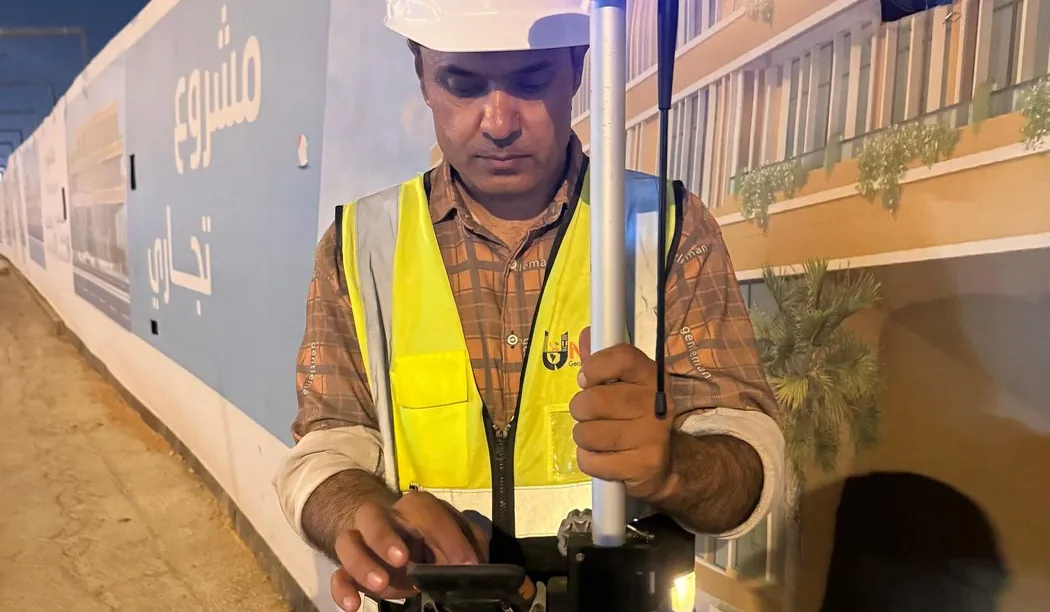
- Lay out survey traverses over accessible target zones, document radar reflections and correlate repeated signatures.
- Report areas requiring supplementary confirmation ahead of excavation or slab penetrations.
Important limitations
A radar anomaly should not be labelled a confirmed pipe, cable or void without corroboration. This public case summary does not reproduce confidential site coordinates or the issued anomaly log.
The depth and confidence of GPR interpretation vary with soil electrical properties, moisture, surface structure, reinforcement and target geometry. A non-destructive survey cannot guarantee that every buried service or embedded hazard has been found.
How this information supports site decisions
The practical purpose is to reduce uncertainty by identifying interpreted targets and zones that merit checks against records or controlled exposure. The issued technical report, not this public overview, determines the actual workfront, deliverables and verified findings.
Ground penetrating radar surveys · Planning before excavation